

Crowns
Gaps in your smile can have a big impact on your self-esteem. They also make normal activities, such as eating and speaking, difficult.
A dental crown is a cap that is placed over a damaged, decayed, or weakened tooth to restore its shape, size, strength, and appearance. Crowns are custom-made from materials like porcelain, ceramic, metal, or resin to match the color and contour of your natural teeth, providing a seamless and natural look.
They are ideal for protecting a tooth after a root canal, covering a large filling, securing a dental bridge, or improving the aesthetics of a misshapen or discolored tooth. Dental crowns are a versatile and long-lasting solution that can help restore both function and beauty to your smile.
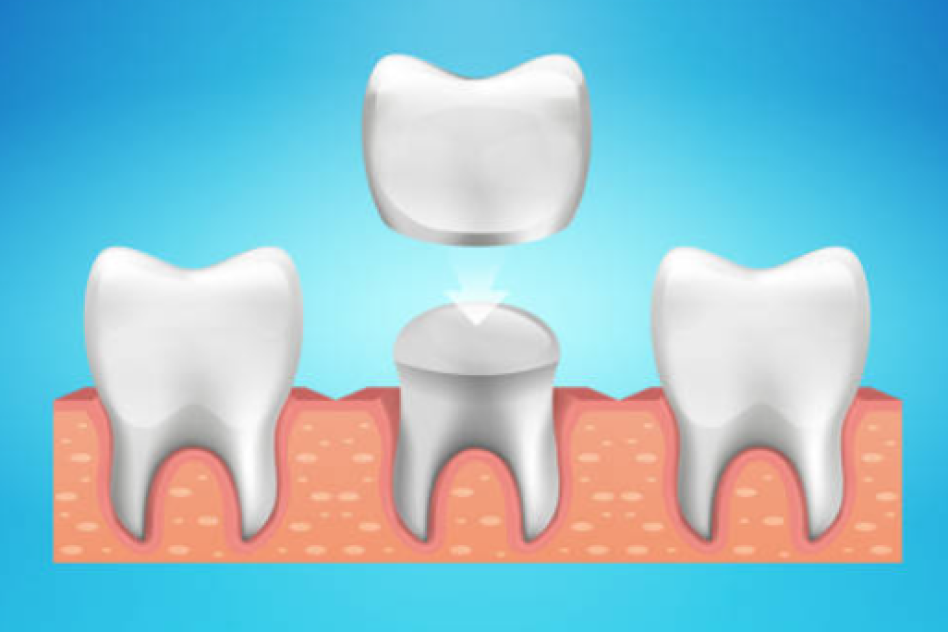
Process:
- Initial Consultation and Examination: The process begins with a thorough dental examination to assess the health of your teeth and determine if a crown is necessary. Your dentist may take X-rays to evaluate the tooth and surrounding bone, ensuring there are no underlying issues that need to be addressed before placing the crown.
- Tooth Preparation: If a crown is required, your dentist will start by numbing with local anesthesia and proceed to prepare the tooth for the crown. This involves reshaping the tooth to make room for the crown. If a significant portion of the tooth is missing due to damage or decay, a filling material may be used to build up the tooth structure to provide adequate support for the crown.
- Impression Taking: After the tooth is prepared, your dentist will take impressions of your teeth to create a custom-made crown that fits precisely. Impressions can be made using a digital scanner or a traditional mold. These impressions are then sent to a dental laboratory where the crown will be fabricated to match the exact specifications of your tooth, including its color, shape, and size.
- Temporary Crown Placement: While waiting for the permanent crown to be made, a temporary crown will be placed over the prepared tooth to protect it and maintain functionality. The temporary crown is typically made of acrylic or composite resin and is designed to last until the permanent crown is ready, which usually takes about one to two weeks.
- Crown Fitting: Once the permanent crown is ready, your dentist will remove the temporary crown and check the fit and color of the new crown. Adjustments may be made to ensure a perfect fit and alignment. When both you and your dentist are satisfied with the crown’s fit and appearance, it will be permanently cemented onto your tooth using a strong adhesive.
- Final Adjustments and Polishing: After the crown is secured in place, your dentist will make any final adjustments to ensure that your bite is comfortable and that the crown fits seamlessly with your surrounding teeth. The crown will be polished to achieve a natural, smooth finish that blends in with your smile.
- Aftercare and Maintenance: Proper care and maintenance of your dental crown are essential to its longevity. Your dentist will provide you with instructions on how to care for your crown, including maintaining good oral hygiene, avoiding hard foods that could damage the crown, and scheduling regular dental check-ups to monitor its condition. With proper care, dental crowns can last many years, providing durable protection and a beautiful appearance for your teeth.
Dental crowns are a versatile solution for restoring and enhancing your smile, helping you achieve both improved function and aesthetics.